
Konbanwa, Awei desu~~
Good evening, I'm Awei!
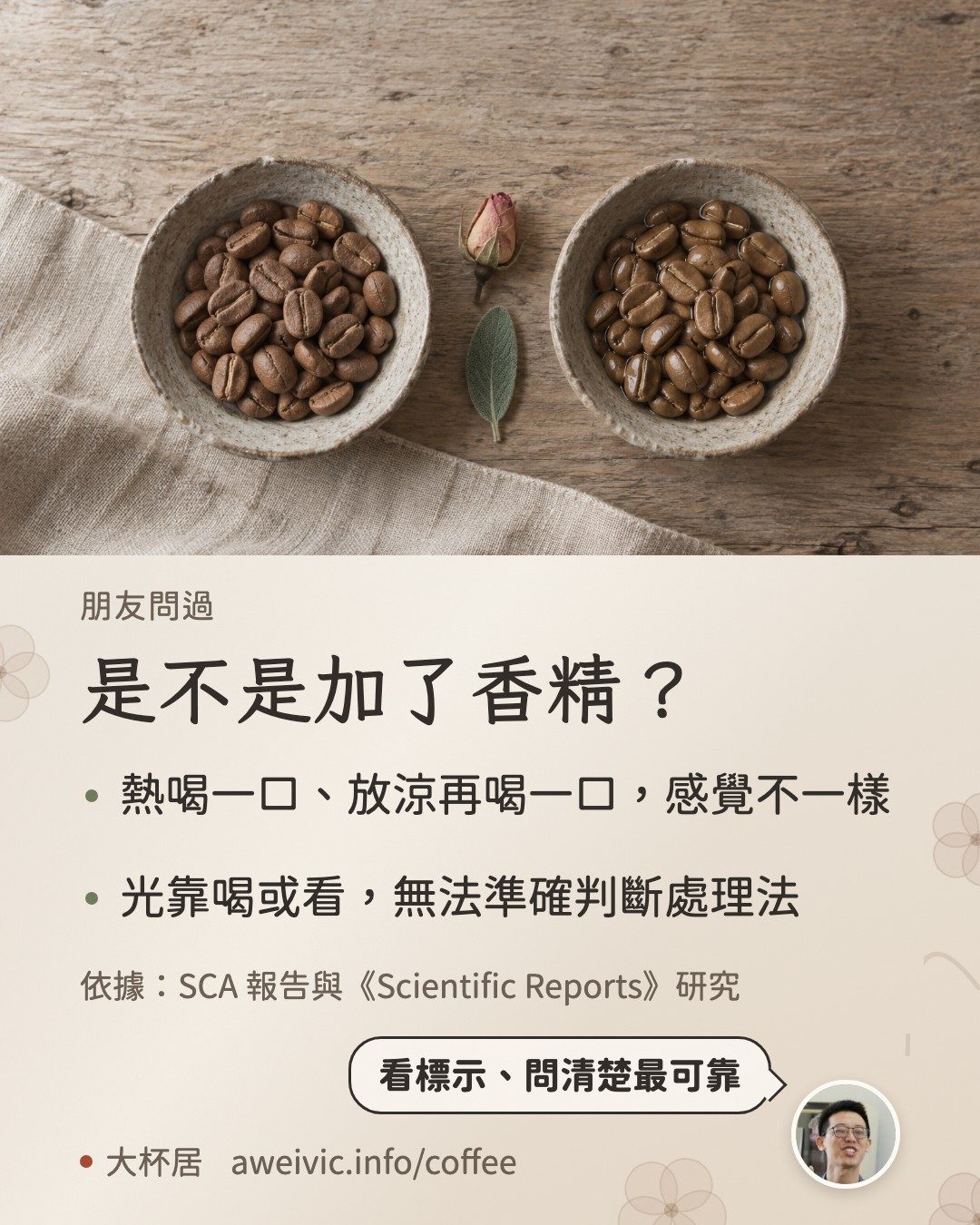
A friend took a sip and asked, "It's so fragrant — was there flavoring added?"
Its name's a bit long: Colombia Paradise Estate, Rose Tea Enzyme Washed. Light roast — the roaster's tasting notes on the label say rose, magnolia flower, and sage.
My last post covered the flavor; this one's about how to brew it, and along the way, let's talk about that question.
Short answer first: neither tasting nor looking at a coffee can tell you exactly what processing it went through. The more reliable way is to read the label carefully and ask about the process directly.
I. Brewing It Right
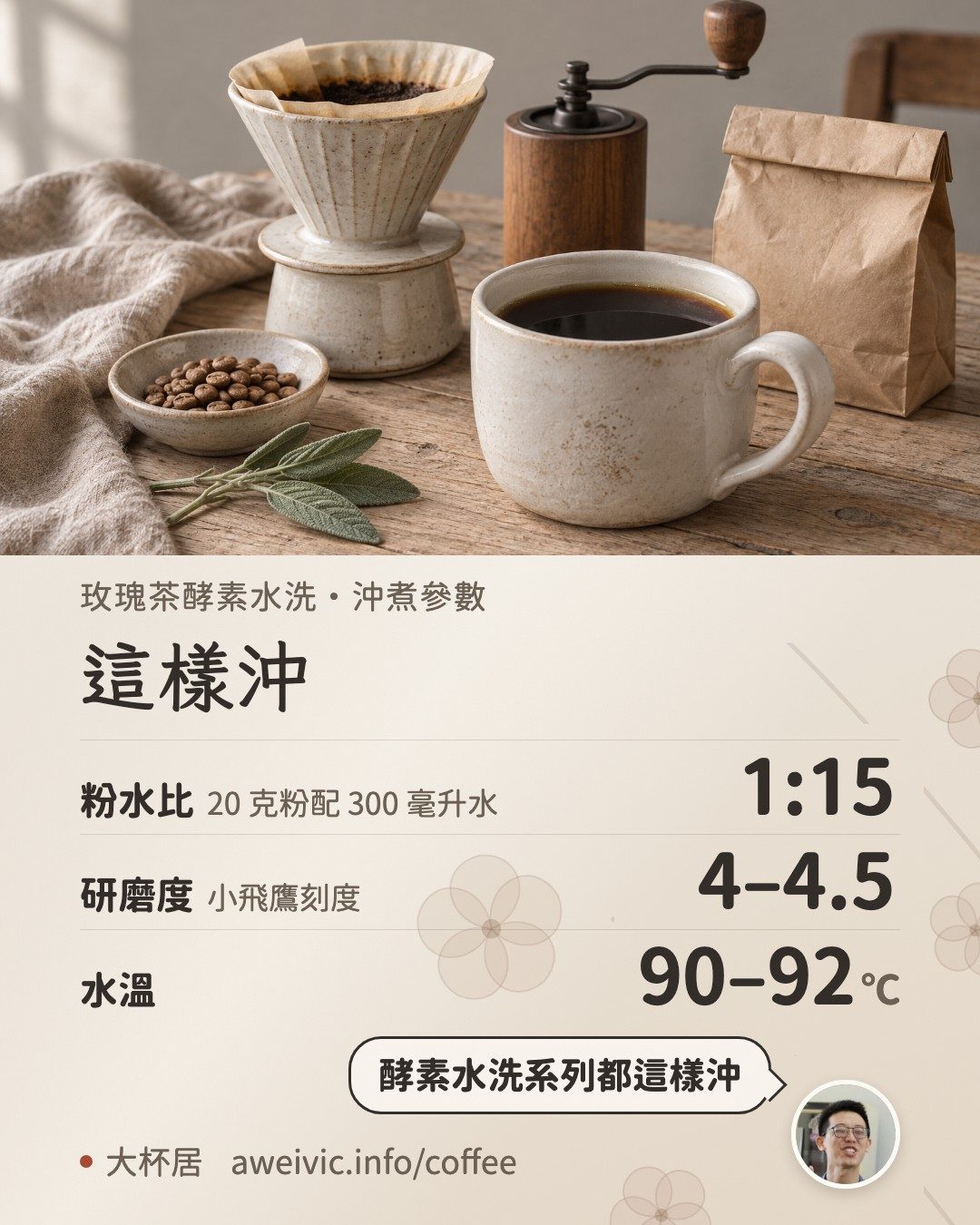
Here's the recipe Awei usually gives customers:
Dose 20g
Ratio 1:15 (20g coffee to 300ml water)
Grind Xiaofeiying grinder, setting 4 to 4.5
Water temp 90–92°C
Brew time about 2.5 minutes
I use these numbers across the whole enzyme washed lineup. Keeping the water at 90–92°C makes it pretty forgiving to get right. Beans with special processing already carry strong, intense flavors on their own. If you want something more balanced, try a different blend instead: 10g of this bean paired with 10g of your usual light-roast Ethiopian, keeping everything else the same. That way, the cup gets the Ethiopian's acidity and body while still holding onto the special-process aroma.
If it tastes too acidic, try grinding a bit finer.
A 2020 study in Scientific Reports had a trained tasting panel drink coffee brewed under different conditions. The result: the higher the extraction, the lower the perceived acidity. Grinding finer just means extracting more from the same dose.
The same study also tested three water temperatures — 87, 90, and 93°C. Once concentration and extraction were matched, temperature made little difference to the flavor.

II. The Aroma Keeps Changing
Open the bag and take a sniff. Grind it and sniff again. Sniff once more during the bloom.
When you drink it, take a sip hot, then another once it's cooled.
With a thoughtfully executed special process, the aroma usually shifts in stages — from the dry fragrance, to the wet aroma, to the scent left in the bottom of the cup once you've finished it.
The same study also found that the hotter the coffee, the more likely it is to taste roasty and bitter. Once it cools down, the same cup can feel quite different.
That's exactly why my last post suggested tasting it hot, then again once it's cooled.
III. How to Think About "Is There Flavoring in It?"
Let's start with something the coffee industry itself is actively debating.
A lot of special processes these days add yeast, bacteria, enzymes, or fruit during fermentation to make the flavor more distinctive.
The Specialty Coffee Association (SCA) published a report in January 2026 specifically on this topic. It found that industry expectations around "adding things during processing" split into almost two opposite camps. Some worry it's unfair and care about consumers knowing what they're actually drinking; others see it as one more path forward for producers who are otherwise at a disadvantage.
SCA's approach is to draft a communication guideline first, so buyers and sellers can be clear about how a coffee was processed, and it plans to pilot this with partners sometime in 2026.
The report also states plainly: there's currently no way to use science or tasting alone to accurately determine what processing a coffee went through.
Then there's the other kind — coffee flavored after roasting. One publicly documented method: after roasting, a propylene-glycol-based flavor oil is drizzled onto the beans while they're being tumbled, then left to rest for 12 to 24 hours before packaging.
If even the professionals are this careful about it, trying to judge it from a single sip was never going to be easy.
Whether you like it or not is really up to your own nose and tongue.
Brew the beans right, take a sip hot, then another once it cools. By the time we're done talking about it, the cup's usually empty too.
You can order from Wide Living Cup's website, with 7-Eleven store pickup (Taiwan) at a location near you — see how to order here.
References
- Batali, Ristenpart & Guinard (2020). Brew temperature, at fixed brew strength and extraction, has little impact on the sensory profile of drip brew coffee. Scientific Reports 10, 16450 (verified 2026-09-14)
- Specialty Coffee Association (2026). What's In My Coffee? Review and Outcomes of Spotlight 2025 (verified 2026-09-14)
- Coffee Flavor Oils. Technical Guide (a supplier's publicly shared flavoring process) (verified 2026-09-14)