
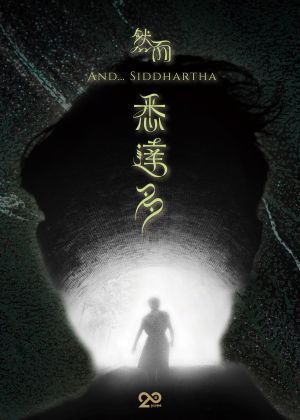
The ferryman leads Siddhartha to listen to the river.
"No past, no future, only now."
A thousand voices — pain, joy, longing — fuse into a single word.
Om.
The stage went quiet, the live musicians' accompaniment fading out. Sitting in the dark of the audience, I felt cool and clear.
Nine years ago, I sat in that same theater, the same Chung Cheng Hall, watching a play by the same company.
*The Flower and the Sword*.
That time I cried until I couldn't stop, and long after the curtain call I still couldn't bring myself to get up.
A post I wrote back then still has this line: "If He comes, I'll be saved."
Who came?
And who was saved?
I cried in earnest, searched in earnest, lived in earnest, but with no sense of direction. Looking back nine years later, it's almost endearingly naive.
I'd just graduated from college and was thoroughly lost, so I strapped on a backpack and a tent and went wandering around the island. (Purely wandering, not cycling around it — that would've been too inspirational. I was just a plain, lost young man.)
Anyway,
I honestly didn't know why people lived.
Why life existed at all.
All I knew was that I was in a lot of pain.
Anyway,
Back then, time was the one thing I had plenty of.
Wandering the streets along the coastal line, I spotted a poster for *The Flower and the Sword*, so I ambled over to Miaoli, bought a ticket, and watched the whole thing.
The reason I'd even do such a thing traces back to a course I took in college — Professor Wang Chun-yen's "Taiwanese Theater Studies" at NCHU's Graduate Institute of Taiwan Literature. Ma Sen's *The Flower and the Sword* had been the reading for that class.
So the moment I saw that poster on the coastal street, a strong sense of familiarity hit me.
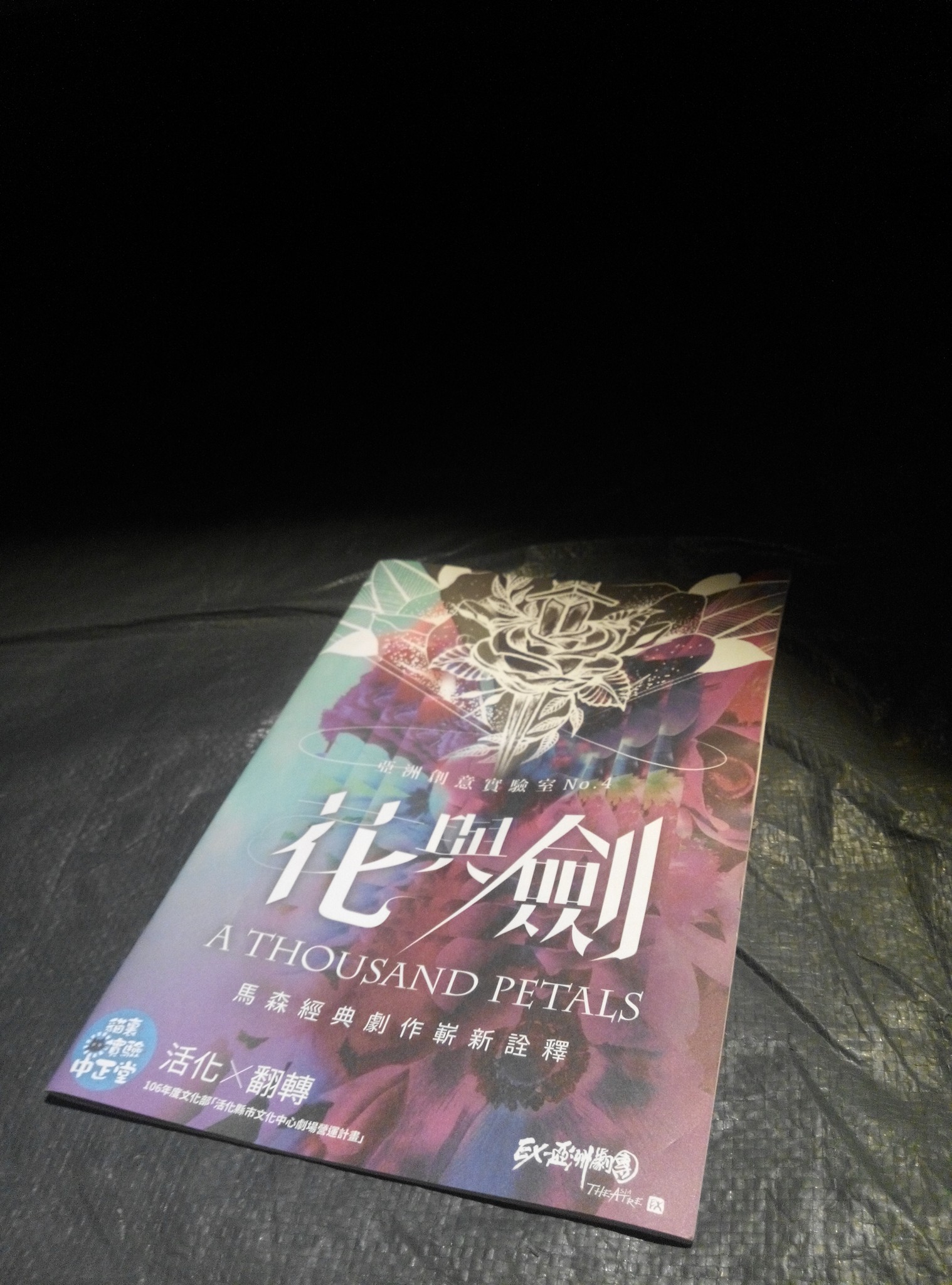
That night after the show, I pitched my tent at an elementary school in Yuanli. Before sleep, I pulled out the flyer, studied it a long time by lamplight, and took a photo.
A few days later, I walked back and watched it a second time.
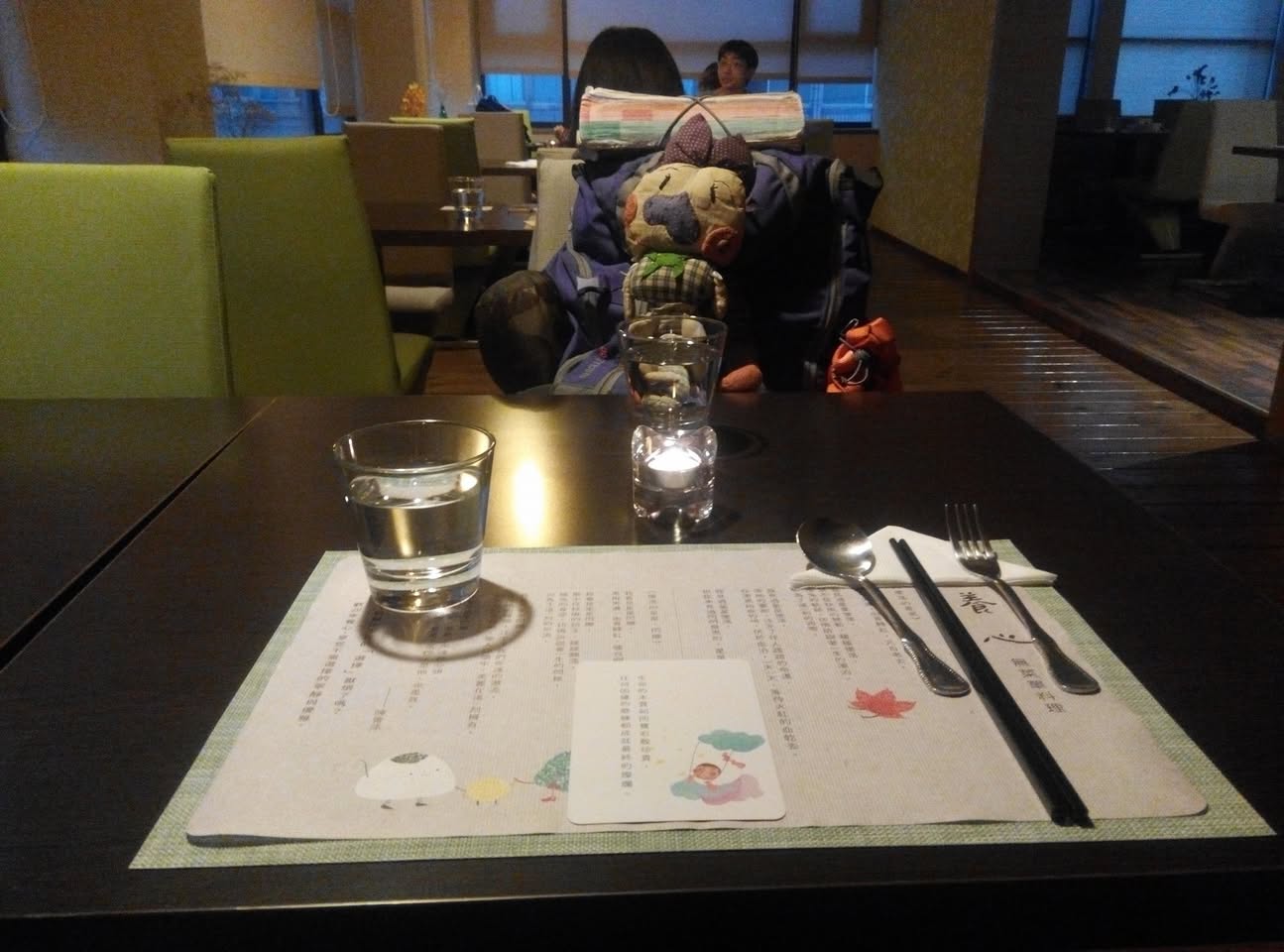
The day of that second viewing, I passed a chef's-choice restaurant called "Yang Xin" on the way — one person, one backpack, one stuffed doll, and a reservation for that evening's Valentine's Day music dinner (wait, what?).
Absurd, honestly.
But fate is a fine craftsman — my introduction to the Dharma, and to all these precious people and things, all trace back to that moment.
Later, I ended up staying and living in Miaoli.
When EX-Theatre Asia was developing an early demo of their adaptation of Hesse's *Steppenwolf*, I had the chance to play a small part accompanying it.
The day of the demo showing, I sat on stage playing and crying at the same time.
(Turns out I'm not really cut out for the stage — the audience hadn't even started crying and the accompanist already had. I really am sorry about that.)
A few years later, *Steppenwolf* officially opened. I bought a ticket, returned to the audience seats, and watched the whole thing through.
Play after play, this company has ferried me through my youth.
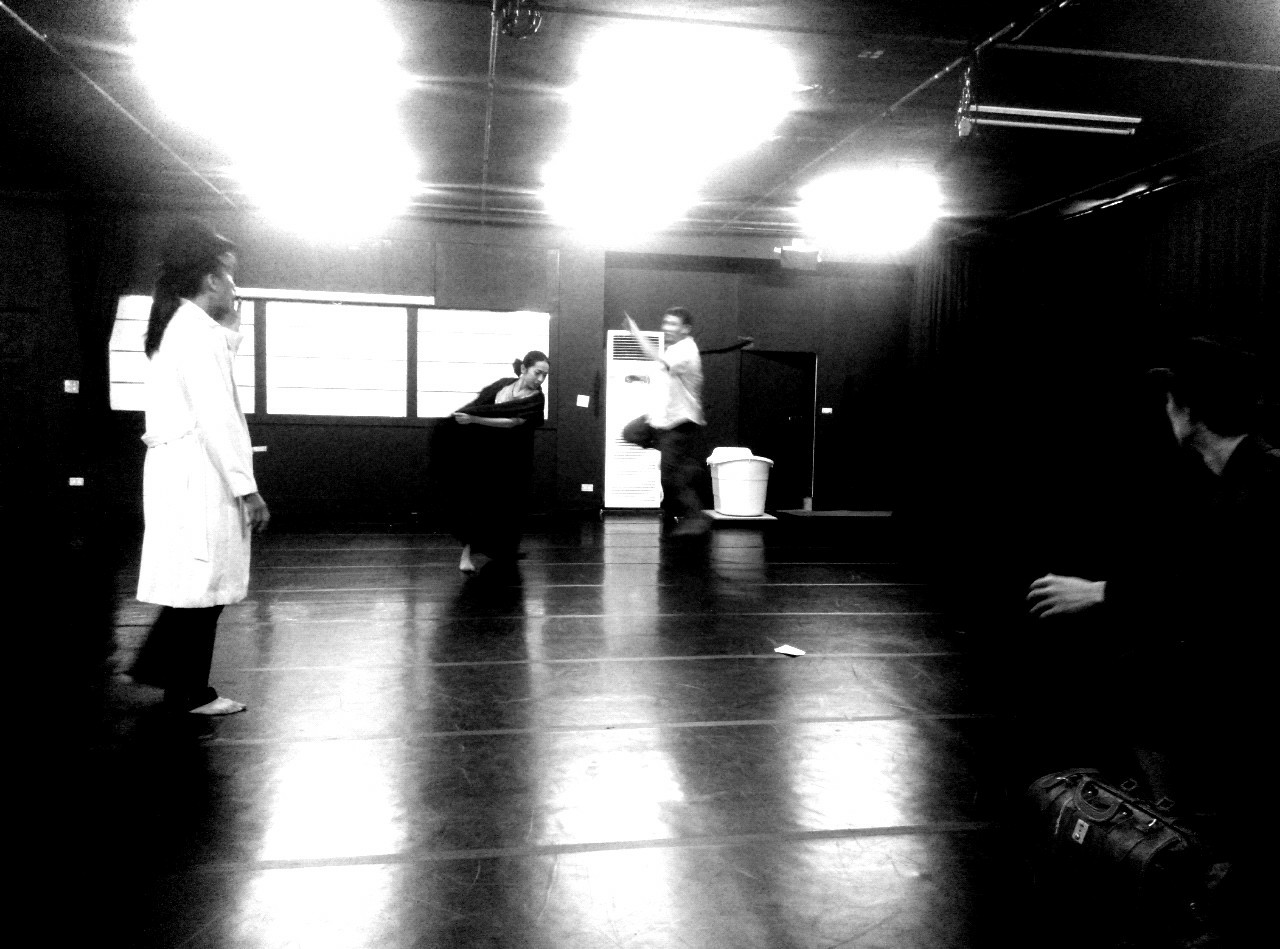
This time, *And Yet, Siddhartha* spends maybe sixty or seventy percent of its runtime on struggle — asceticism, desire, gambling, collapse. Nine years ago, these scenes probably would have wrecked me completely.
I watched it all quietly, like watching an earlier version of myself.
That lost, intense young man who still longed for peace.
The theater is a mirror.
The black box is a private hollow to whisper into.
The play stays the same — it either reflects back my sobbing or my calm.
The play hasn't changed. I have.
Back then, I broke down in that theater because I didn't understand.
Inside me, one Awei argued endlessly with another Awei and another, and when someone on stage acted out that kind of tearing apart, the tears just came.
These years of slowly studying the Dharma have led me somewhere very simple in the end.
The river is just the river.
The mind is just the mind.
Everything flows through it, and it's unaffected.
The greatest truths are the simplest. How good is that.
Near the end, there's a line in the play: "True awakening must include love."
After the show I ran into Professor Wang. This time he served as the production's dramaturg, weaving this generation's questions into the script alongside Hesse's original.
His smile was as bright as ever, still the same handsome man from that classroom years ago — time seemed to have skipped right past him.
After I got home, I borrowed Hesse's *Siddhartha* from the library. I didn't finish it.
But late one night, reading the pages where Siddhartha hears a thousand voices by the river fuse into a single word, I stopped for a long time and took a photo of the page.
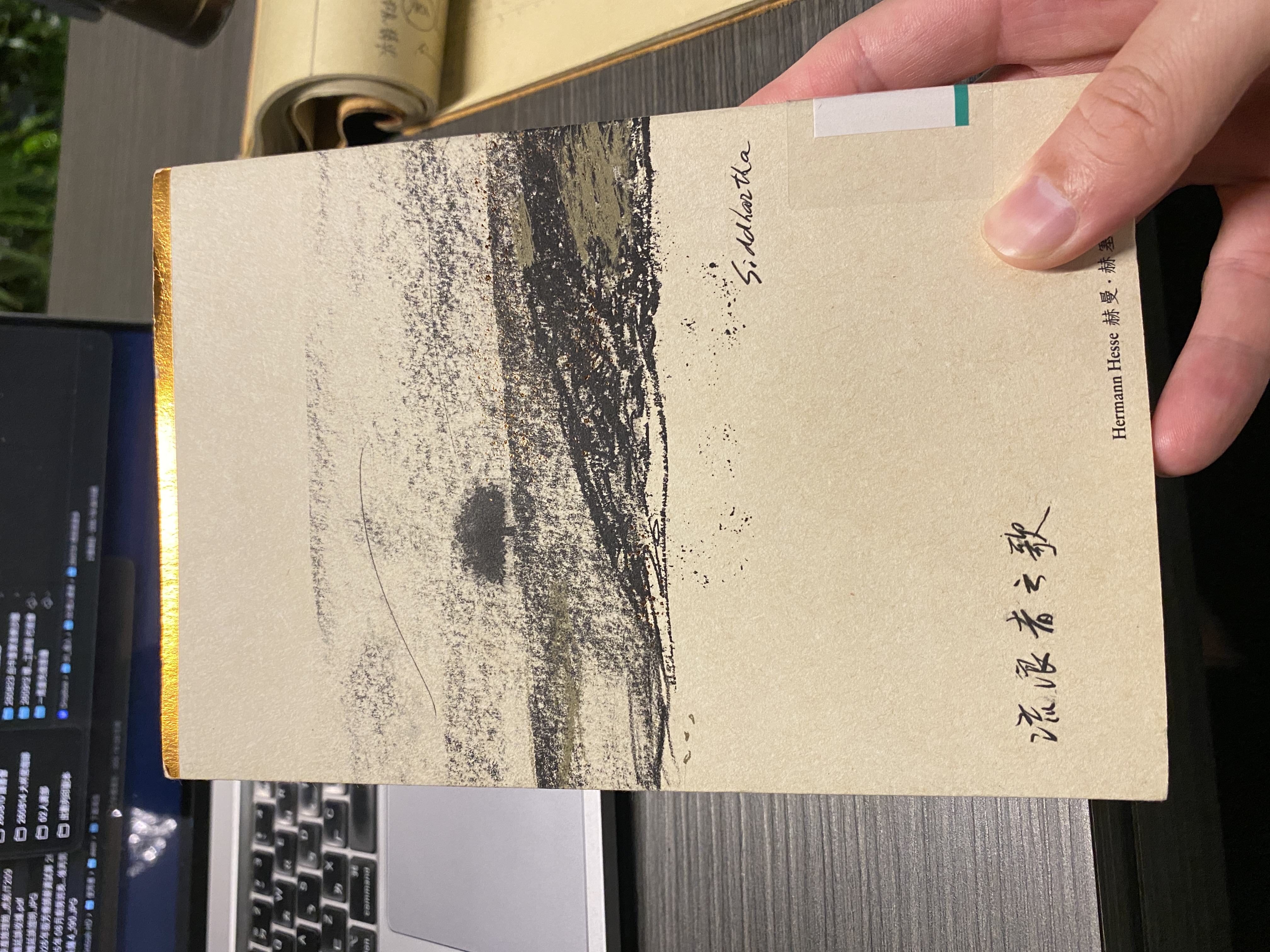
From a college course, to a poster, to a twentieth-anniversary flagship production — the thousand voices of time's river converge into one.
"Om."
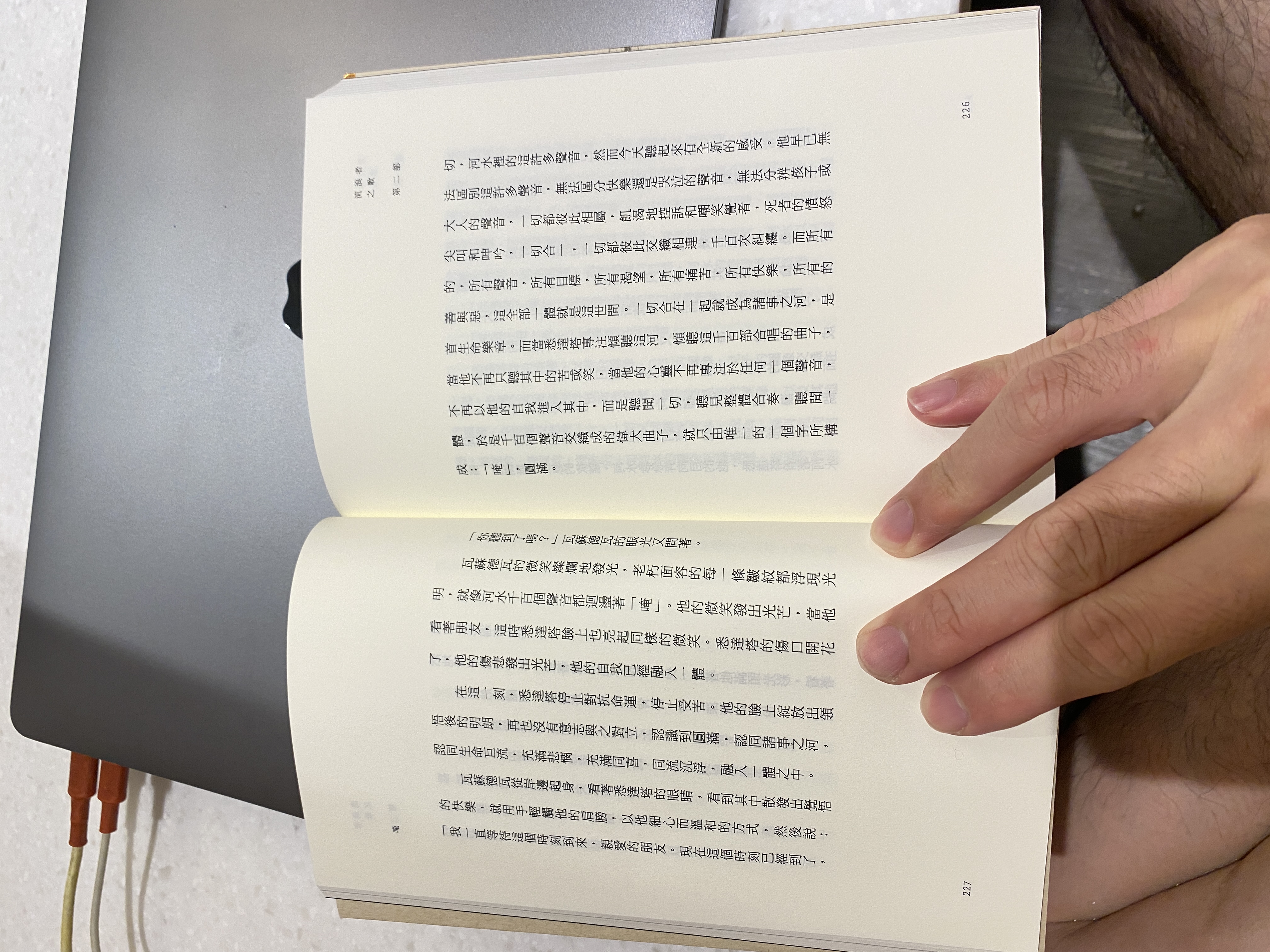
Awei, written after watching *And Yet, Siddhartha*, early autumn, 2026.08.23
A small note: thanks to an old friend for inviting me to this show — it made me really happy. By the way, nine years ago at *The Flower and the Sword*, the people sitting behind me in the audience turned out to be his parents. After the show, they kept wondering about the audience member who'd cried so hard. It wasn't solved until years later, when I started working at their family's café — the mystery was me.
—
Further reading |